In Tennessee, leads don’t arrive the way they do in big anonymous markets. They show up wearing familiar faces—someone’s cousin from Smyrna, a church friend in Lebanon, a contractor your neighbor swears by because he “actually answered the phone.” In 2026, that old-school closeness is still the advantage… and it’s also the filter. People are surrounded by ads, flooded with AI-polished claims, and tired of “limited-time” pressure. What cuts through isn’t louder marketing. It’s earned trust, delivered in a sequence that feels human.
That’s where the Rule of Reciprocity becomes more than psychology—it becomes a practical acquisition system:
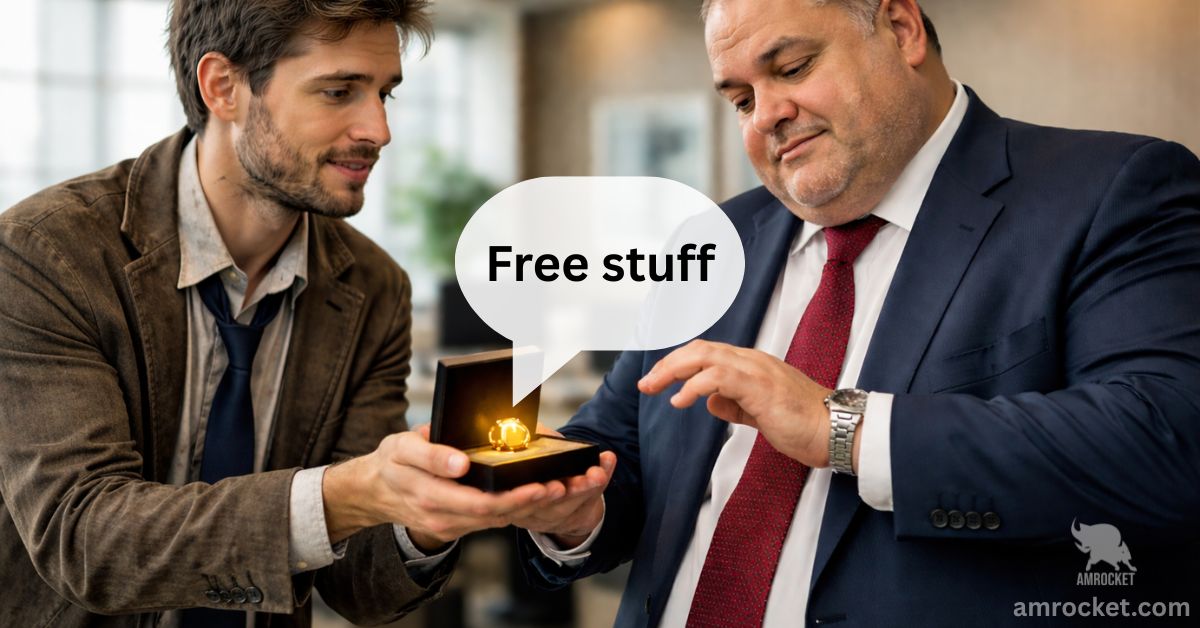
Offer free stuff that others charge for, so people may owe you and are more likely to buy from you.
The key is that your “free” can’t be fluff. It has to be useful enough to keep even if they never hire you. In Tennessee, that kind of value travels fast—because locals share it.
Reciprocity, done right: the “Keep It Anyway” offer
Most businesses give away something that costs them nothing: a generic estimate, a canned “audit,” a vague consultation. The market has learned to ignore it.
Instead, make your free offer a deliverable:
- A roofer gives a 10-photo inspection report with annotated problem areas and a plain-English “what fails next” priority list.
- A concrete company gives a site readiness checklist: grading notes, drainage callouts, access constraints, and a materials recommendation—one page, printed and emailed.
- A web/marketing firm gives a Google Business Profile cleanup plan: categories, services, missing photos, Q&A prompts, review link, and three local keyword angles tailored to the client’s city.
Then you add one sentence that changes the whole emotional posture:
“Keep this even if you don’t hire us.”
Now your offer stops feeling like a trap and starts feeling like a favor. Reciprocity doesn’t mean people feel manipulated—it means they feel respected. In a local Tennessee market, respect is currency.
The three pillars: a lead engine, not three separate ideas
Your pillars—(1) get high quality leads, (2) treat customers well, (3) get reviews—aren’t independent tactics. They’re a flywheel. Each one makes the next one easier, cheaper, and more reliable.
Pillar 1: Get high-quality leads (by qualifying with value)
Reciprocity isn’t just a way to attract people. It’s a way to filter out the wrong people.
When you give away something tangible, only serious prospects will take the next step—because they’ve already seen you do real work. Your lead quality improves because the first interaction wasn’t a pitch; it was proof.
In 2026, focus your distribution where Tennessee decisions actually get made:
- Local Facebook groups (city/neighborhood groups, parent groups, small business groups): post the deliverable as an educational resource, not a sales post.
- Nextdoor and community boards: offer a seasonal “free check” that produces a documented report.
- Partnership swaps: plumbers ↔ remodelers ↔ roofers ↔ realtors. Your reciprocity offer becomes the “gift” they pass to their customers.
- Offline touchpoints: QR codes on trucks, yard signs, job-site placards—leading straight to a “Get the free report” landing page.
The goal is simple: stop competing on claims (“best,” “top-rated,” “affordable”) and compete on helpfulness that can be verified.
Pillar 2: Treat customers well (so the marketing becomes true)
In Tennessee, service is remembered longer than price. “Treated us right” is the line that gets repeated at cookouts and hardware store counters.
Treating customers well is not just being nice—it’s operational:
- Same-day response windows, even if the answer is “We can’t get there until Thursday.”
- Clear expectations (what happens next, who shows up, what it costs if X changes).
- Documentation (photos, updates, timestamps).
- Clean handoffs (jobsite cleanup, final walkthrough, punch list done fast).
Great service doesn’t just close leads. It reduces refunds, cancellations, disputes, and the hidden costs that quietly kill margins. That margin is what lets you keep offering “free stuff others charge for” without starving.
Pillar 3: Get reviews (and make them inevitable)
Reviews are the modern version of Tennessee word-of-mouth—public, searchable, and permanent.
The mistake is asking randomly. The right approach is to ask at the moment of relief: when the homeowner sees the leak stopped, the driveway finished clean, the website finally loading fast.
Make it easy:
- Text them a single link.
- Include a QR code on an invoice.
- Provide a short prompt: “If you mention the city and what we did, it helps neighbors find us.”
And keep it ethical: ask everyone, not just the happiest. You’re not gaming a platform—you’re building a record.
The 2026 advantage: trust beats polish
Your competitors can buy ads. They can generate content. They can copy your keywords. What they can’t easily copy is a system that produces proof at every step: a valuable free deliverable, a customer experience that matches the promise, and reviews that read like real life.
In the local Tennessee market, that flywheel becomes a moat. Not because it’s flashy—but because it’s true.
And truth, in a small place, has a long memory.